
2026 Forum Speakers
*click on photos to enlarge*

SPENCER BENNETT
Spencer Bennett is a Resource Management Officer for Bruce Peninsula National Park (BPNP). Having worked for BPNP since 2018, his work has been focused on the prevention and management of Invasive Alien Species (IAS) within both Bruce Peninsula National Park and Fathom Five National Marine Park (FFNMP). With expertise in plant identification, IAS management, and fish/wildlife identification & management. He has a passion for the natural world and all its wonders, while primarily focusing on botany and conservation efforts to protect sensitive species and habitats that call the Saugeen (Bruce) Peninsula home.

ERIN S DUNLOP
Dr. Erin Dunlop is a Senior Research Scientist with the Ontario Ministry of Natural Resources, based out of Trent University in Peterborough Ontario. Erin leads a research program focused on factors influencing the sustainability of fish populations in the Great Lakes and Lake Simcoe. Much of her research over the past decade has focused on the drastic ecosystem changes caused by dreissenid mussels and how those changes have affected lake whitefish, a species of cultural, economic, and ecological importance in Lake Huron.
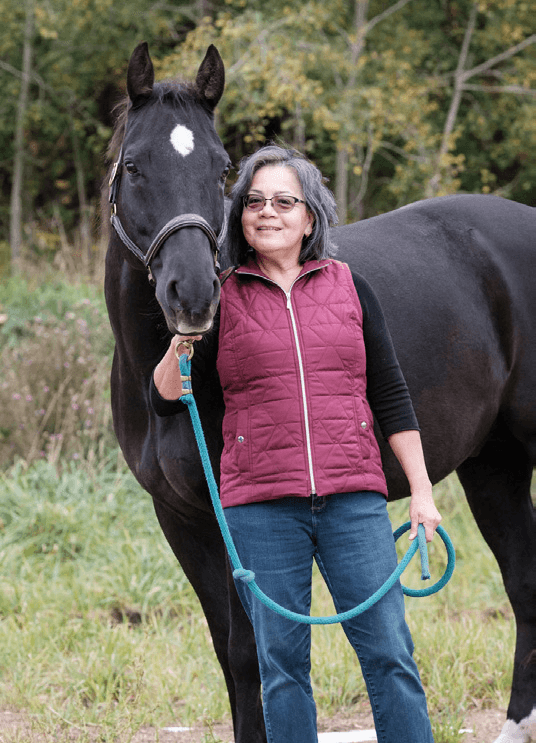
LENORE KEESHIG
Lenore Keeshig (Anungo-kwe) is Wolf Clan, and a traditional Anishinaabe storyteller from the Chippewas of Nawash Unceded First Nation. For over 23 years, Lenore has provided land based educational programs highlighting the natural and cultural history of the Saugeen Peninsula and the Great Lakes from the Anishinaabe perspective. As a storyteller, Lenore has been able to connect traditional Anishinaabek stories to current geological research. She worked for many years with Parks Canada, and now sits as an elder advisor on SON's Parks Advisory committee.

RYAN LAUZON
Ryan Lauzon is a fisheries management biologist focused on Great Lakes fish populations and Indigenous-led stewardship. He works with the Chippewas of Nawash Unceded First Nation, supporting evidence-based management, fish community assessment, and applied research to protect and restore culturally and ecologically important species in Lake Huron and Georgian Bay.

SHAWN MCKNIGHT
Shawn McKnight has worked in the not-for-profit sector for 25 years, developing a transferable, county based ecological restoration program. The past five years, I have been focused primarily on residential natural landscape.

NICHOLAS E. MANDRAK
Nick Mandrak is a Professor of Biological Sciences at the University of Toronto Scarborough. He is Program Director of the Conservation and Biodiversity stream of the professional Master’s program at UTSC. Nick is a Research Associate of the Royal Ontario Museum and South African Institute of Aquatic Biodiversity. Nick has co-authored over 400 scientific publications and six books, including the recently revised, “ROM Field Guide to Ontario Fishes”. Prior to joining UTSC, Nick was a DFO research scientist working on endangered and invasive species, including Asian carps. Nick is also a Lake Huron resident, currently living in Grand Bend.

KAYLA MARTIN
Kayla is a first-year biology master’s student at the University of Waterloo with a focus on an aquatic invasive species, Hydrilla verticillate. After graduating from Wilfrid Laurier University’s Water Science and Environmental Health (BSc) program in 2022, she has worked for the University of Waterloo, where she is currently a member of the Ecohydrology Research Group. Her latest project was with the United States Environmental Protection Agency. The international team of scientists conducted a weeklong expedition onboard the R/V LAKE GUARDIAN where she collected sediment core samples from the bottom of Lake Erie. Kayla is active in Great Lakes conservation and education efforts. Her interests lie in examining our interactions with water, the environmental impacts and ways to achieve sustainability for future generations. Recently she was featured in the documentary All Too Clear which will premiere as a three-part series on TVO in October 2024. Certified in 2013, Kayla represents the upcoming generation of shipwreck divers and since 2014 has shared her passion at conferences across North America. She promotes preserving historic shipwrecks and low-impact diving as the Heritage Ambassador for Save Ontario Shipwrecks and serves on the board of the Ontario Marine Heritage Committee. She volunteers as a member of the Canadian Harvard Aircraft Association Dive Team to recover lost airmen and their planes. Her goal with the Great Lakes Shipwreck Preservation Society is to create a 3D photogrammetry model of every known shipwreck in the Great Lakes. In addition to creating models, Kayla runs workshops to train others in the process. Kayla was selected as a 2023 Royal Canadian Geographical Society Expedition Grantee, where she led a flag expedition to document the OLIVER MOWAT, an intact Great Lakes Schooner in the waters off Picton, Ontario.
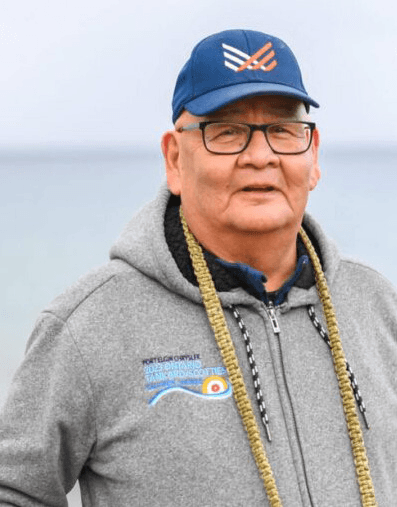
MIPTOON

BRIAN POPELIER
Terrestrial Ecologist and Land Stewardship Coordinator for The Bruce Trail Conservancy Conducts Ecological Land Classifications and biological inventories of BTC owned properties. Supervises and coordinates 214 volunteer Land Stewards on the management of over 3000 ha of BTC managed land from Niagara to Tobermory including restoration projects, encroachment, species at risk, and stewardship issues.
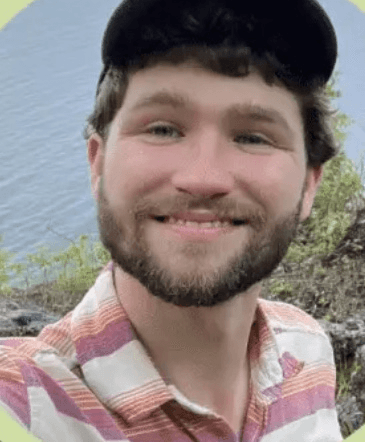
BEN MCLEOD
Parks Coordinator, Environmental Office, Saugeen Ojibwe Nation. As Parks Coordinator, I support SON's Parks Advisory Committee. We're now focused on a shared governance agreement for the part of the territory currently administered by Parks Canada. We're also breaking down barriers and building relationships with other conservation areas, to ensure that SON access and connections to these places grow.
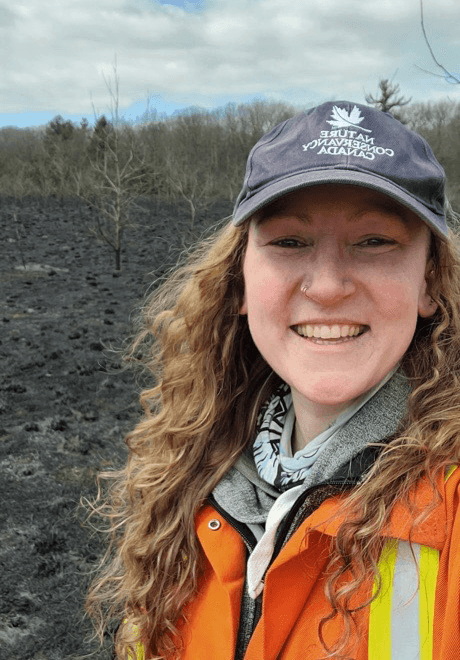
SAMANTHA SOMMER
Sam started at Nature Conservancy of Canada in 2021 as an Assistant Conservation Biologist. She then held the position of Invasive Species Stewardship Team Lead, moving in 2023 to the position of Habitat Restoration Team Coordinator, and was recently moved to the position of title of Habitat Restoration Team Manager. She oversees the coastal marsh invasive Phragmites australis management on federal, public, and private lands in Norfolk County. She has led the Long Point Phragmites Action Alliance for several years, a team made up of a variety of groups with the common interest to restore and maintain Habitat via Phragmites management; the LPPAA includes various partners in conservation, agriculture, governments at the municipal, provincial, and federal level, and private landowners. She also oversees the Invasive Species Stewardship Team, a stewardship team focused on working with internal and external partners to manage invasive species of all types throughout the year throughout the province of Ontario.
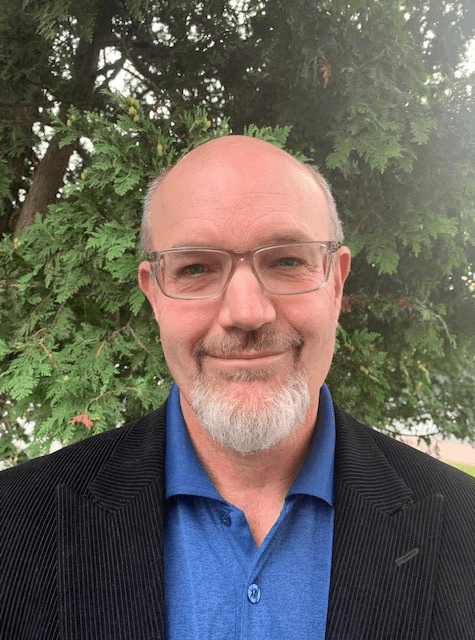
PETER STOETT
Peter Stoett is Dean and Professor, Faculty of Social Science and Humanities, Ontario Tech University, Canada. He has researched and published on global environmental policy; international human rights issues; climate change, justice, mitigation, and adaptation; marine and other plastic debris science and action; invasive alien species: drivers, impacts, and control; transnational environmental crime and regulation; human-nature relations and legal representations of nature; and solar geoengineering. Dr. Stoett recently co-chaired the first global assessment on invasive alien species, approved by the 145 member countries of the Intergovernmental Science-Policy Platform on Biodiversity and Ecosystem Services (IPBES); he also recently co-founded the Canadian Environmental Crime Research Network (CECRN). In 2012 he founded the Loyola Sustainability Research Centre at Concordia University. He has been an active member of the Scientists’ Coalition for an Effective Plastics Treaty since 2020. Peter spent most of his childhood summers at his family’s cottage on beautiful Lake Huron near Southampton, where he gained his lifelong appreciation of nature and wildlife.
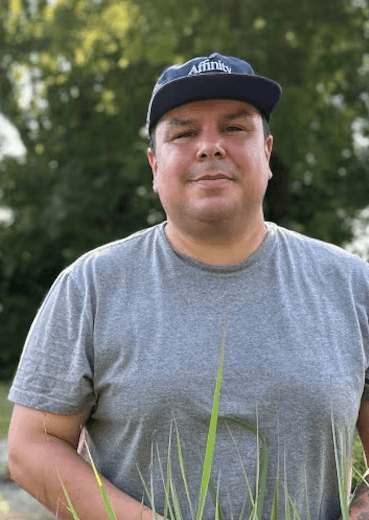
ZACH KEESHIG
Zach Keeshig is the owner and head chef of Naagan restaurant in Owen Sound. Born and raised in Owen Sound, he knew he wanted to become a chef at the age of 17, after a part-time job in a restaurant. He went on to study at Georgian College for Culinary Arts, then did an apprenticeship under Chef Tim Johnston. Continuing to build on his culinary education, he went on to work in various restaurants across Ontario with many of the top chefs in Canada. His time in the kitchens of places like Michael Stadtländer’s Eigensinn Farm (9th Best Restaurant in the World 2002), Restaurant Pearl Morresette (1 Michelin Star), Canoe (Michelin recommended) Enigma (1 Michelin Star) and Langdon Hall (Michelin recommended), has helped him fuse his Ojibwa cuisine with modern culinary techniques and ingredients.